

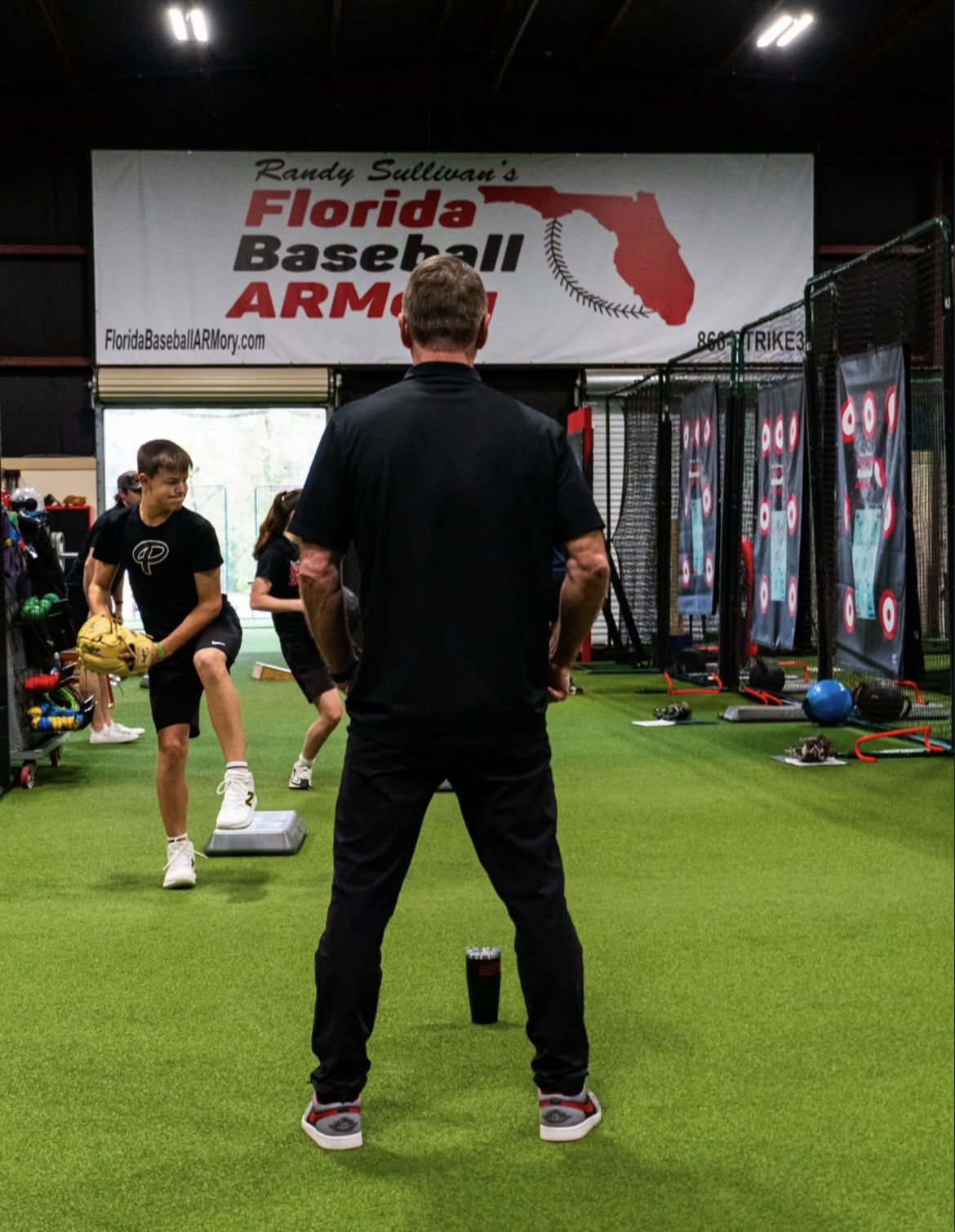
Late April, 1986. I was a senior catcher at The Citadel and our season was basically decided. Two more midweek games, then a last weekend series that did not change the standings. In a walk off loss to Jack Leggett's Western Carolina squad, we had just missed our shot at the conference tournament, which meant the rest of the schedule was supposed to feel like a slow walk to the exit.
But one of those midweek games was against South Carolina.
If you grew up in South Carolina, played high school ball 35 minutes from their campus, and ended up walking on at The Citadel, you know what that game really is. It is a receipt. It is a reminder. It is the night you try to prove you were never “not good enough,” you were just not selected.
So yes, the game mattered.
And the man who mattered most to us was our head coach, Chal Port.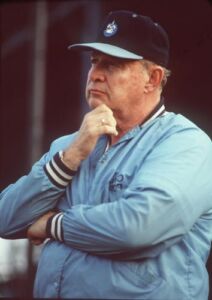
Coach Port was legendary. Old school. Demanding. The kind of coach who built men with standards, then enforced those standards with a thunderous voice. He did not give away praise like candy. He did not trade in warm fuzzies. He did not even call me by my first name. Not once.
It was always “Sullivan.”
“Sullivan, get off the field.”
“Sullivan, why would you call a changeup there?”
“Sullivan, you lead the league in insignificant hits.”
I wanted his approval the way most athletes want air. Even though I had logged a solid season (hitting at a .387 clip), the only compliment I ever felt I got was seeing my name written in the lineup.
Then… He said my name.
And that is why what happened in the ninth inning still hits me in the chest, four decades later.
We were tied 4-4 in the top of the ninth. I led off the inning. The moment was heavy… a rivalry game… last stretch of my career. Everything inside you wants to do something that matters.
I dug in for the first pitch and heard Coach Port’s voice cut through the noise of the crowd.
“Come on Randy! You can do it!”
He said my name.
I stepped out of the box and called time. Not because I was mad. Not because I was rattled in the normal sense.
I stepped out because my brain could not process what I had just heard.
He said my name.
My first name.
I remember thinking, “He said my name! He said my first name! I did not even know he knew my first name.”
He said my name…
And right there, something changed.
The pressure of the moment faded. The fear faded. The noise faded. I felt like Superman.
He said my name.
He said … my name.
Then I took the swing of my life and hit a home run that is still the farthest ball I ever hit. Game winner. Top of the ninth. A moment that stitched my whole career together.
All because he said my name.
Why does hearing your name do that?
This is not just some sentimental coach story. There is real science behind it.
Your name is one of the most self-relevant stimuli you will ever hear. In neuroscience, “own name” effects are so reliable that researchers use them to test attention, awareness, and self-processing. Studies show that hearing your own name produces distinctive brain responses compared to other names, including stronger attention-related signals (1).
Even more interesting, this “own name” response can show up when consciousness is reduced, like sleep, or in clinical populations, which tells you how deeply wired it is (2).
Put simply:
When someone says your name, your brain flags it as, “This is for me.”
It pulls you into the moment.
It increases orienting and engagement.
It can change the way you process what comes next (3).
Now connect that to sport.
Pressure is not just nerves. Pressure is attention getting hijacked by threat.
Threat says: Don’t mess up.
Threat says: You better impress them.
Threat says: One bad inning and everything changes.
But belonging says something different.
Belonging says: You’re seen.
Belonging says: You’re safe enough to compete.
Belonging says: You have a place here, now go do what you trained to do.
When Coach Port said, “Come on Randy,” it did not magically give me more talent. It gave me something else.
It gave me a nervous system shift.
From “prove yourself” to “play baseball.”
That is what saying someone’s name can do.
And that is part of what you get when you train at The Florida Baseball ARMory.
The problem with modern player development
Baseball training is going through the same “big box” transformation you have seen in every other industry.
Scale wins.
Franchises pop up in multiple locations.
Facilities pack in 78 employees.
Athletes get herded through stations like cattle.
And I get it. From a business perspective, it is efficient.
But from a development perspective, it is often a disaster.
Because pitchers do not develop in an assembly line.
They develop in relationships.
Development requires context.
It requires continuity.
It requires someone who knows the athlete’s history, patterns, and constraints.
Most importantly, it requires an environment where the athlete is treated like a person, not a number.
You cannot copy and paste a throwing arm.
You cannot franchise care.
So, we chose a different path.
What makes The ARMory different
When you train at The ARMory, you get a staff that knows your name and knows your story.
Not your “social media story.”
Your actual story.
Your injury history.
Your workload history.
Your movement tendencies.
Your competitive season calendar.
Your recovery capacity.
Your mindset under pressure.
In other words, we do not just coach “pitching.”
We coach the pitcher.
And you also get me.
Not a franchisee.
Not the 60th best coach on a huge staff.
Not a handoff.
I still personally conduct every evaluation and every video analysis of every bullpen.
I still write every single throwing program.
Every mobility plan.
Every strength and power plan.
Since 2008, I have done more than 40,000 pitcher evaluations, and I have written and or modified an equal number of training plans.
I have worked with hundreds of major leaguers, thousands of minor leaguers, and more college and high school pitchers than I can count.
And every one has gotten the best I have to give.
Every time.
Because I know their name.
And when I say their name, I mean something specific by it:
I see you.
I know what you need.
I have a plan.
Now let’s go earn it.
Why this matters in summer training
Summer is when separation happens.
Not because summer is magic.
Because summer is the window where most players either:
- Build the physical capacities that protect the arm and create velocity, or
- Keep throwing while underprepared, and hope their elbow does not send them an invoice.
Summer is when you stack reps, but the right kind of reps.
Summer is when you refine your movement solutions, not just “repeat mechanics.”
Summer is when you make strength and power the foundation, not an afterthought.
Summer is when you build the durable habits that show up in the sixth inning.
And summer is when the athlete needs coaching that is both demanding and personal.
Personal means your plan is your plan.
Demanding means we actually hold the line on what the plan requires.
That combination is rare.
It is also what wins.
The ARMory Truth:
If you are a pitcher (or a parent of one), you already know the real desire.
You want your son to be confident, healthy, and dangerous on the mound.
You want him to walk out there knowing:
My body is prepared.
My stuff plays.
My command holds up.
My arm is protected by the way I move and train.
But the problem is not motivation. It is uncertainty.
What should he do this summer?
How much should he throw?
How do you build velo without blowing up the arm?
How do you fix command without turning him into a robot?
How do you develop better breaking balls without guessing?
That uncertainty is the villain.
Our role is to be the guide with a plan.
Not a generic plan.
A hand-crafted plan.
And the plan starts the same way it always has at The ARMory:
We learn the athlete.
We measure what matters.
We build training around the constraints that actually move the needle.
Then we execute.
The plan
Here is what SAVAGE Summer Training is designed to do:
- Evaluate the athlete, not just the pitch.
- Build a customized throwing, mobility, and strength and power plan.
- Train five days a week with high-quality reps and real coaching.
- Develop velocity, command, pitch shapes, and arm resilience together, not in separate silos.
- Leave summer with momentum, not miles on the arm and questions in your head.http://www.hagar.cz/
That is the difference between training and hoping.
What’s at stake:
If you get this right, the season feels different.
The mound feels like home.
The athlete competes with clarity.
Workload does not feel like a gamble.
Confidence is earned.
If you get this wrong, summer becomes a slow leak.
A little soreness becomes “normal.”
A little velocity loss becomes “mystery.”
A little command drift becomes “mechanics,” and suddenly you are chasing your tail.
Most of the time, the biggest cost is not injury.
It is wasted time.
You only get so many summers.
Early Bird ends April 15th
If you are considering SAVAGE Summer Training, do not wait.
And more importantly, the calendar does not care if you are ready.
Summer is coming either way.https://www.abilenemotor.com/contact-us/
If you want a summer where every athlete is known, coached, and developed with a plan that fits him, this is your move.
Register here for SAVAGE Summer Training Program now. Or call us at 866-787-4533
Come train where we will know your name, and we will mean it.
References:
- Tacikowski P, Cygan HB, Nowicka A. Neural correlates of own and close-other's name recognition: ERP evidence. Front Hum Neurosci. 2014 Apr 4;8:194. doi: 10.3389/fnhum.2014.00194. PMID: 24772076; PMCID: PMC3983482.
- Holeckova, I., Fischer, C., Giard, M.-H., Delpuech, C., & Morlet, D. (2006). Brain responses to a subject’s own name uttered by a familiar voice. Brain Research, 1082(1), 142–152.https://doi.org/10.1016/j.brainres.2006.01.089
- Wang Y, Liu Y, Wang X, Kendrick KM, Feng T. The Effects of Hearing One's Own Name on Subsequent Attention to Visual Stimuli in Autistic and Neurotypical Children: An ERP Study. J Autism Dev Disord. 2024 Nov 23. doi: 10.1007/s10803-024-06639-1. Epub ahead of print. PMID: 39579283.
About the Author:

Randy Sullivan, MPT, CSCS
CEO, Florida Baseball ARMory
Our founder and CEO, Randy Sullivan wears a bunch of hats: Physical Therapist, Baseball Instructor, Certified Strength & Conditioning Specialist, Paid Player Development Consultant to MLB teams, Public Speaker and of course an Author.