


Early in my coaching career, I thought I was building a baseball team. I had no idea I was about to meet a boy who would burn every assumption I had about coaching to the ground and rebuild The ARMory’s entire culture from the ashes of his heartbreak.
The Night I Met Lance
I remember the tryout sheet like it was yesterday. Ten-year-old little leaguers, names and ages neatly typed down the left side, scouting categories across the top: fielding, throwing, hitting, running. I even added two secret columns—GLM and DIA (I’ll let you figure out what those meant).
By the end of tryouts, I’d handed out six perfect 5s. Everyone else got a 3, because giving a 1 or 2 felt too harsh for kids who still needed help tying their cleats. Then came the draft, and with it, the rude awakening that every veteran coach in that room knew and I didn’t: the backroom deals had already been made.
By my last pick there were three players left.
Two of them were “DIA” kids. And then there was Lance.
Lance was 12.
He’d been passed down from the 11/12u draft, a kid nobody wanted. Next to his name, I’d scribbled in my notes: “tall, gawky.”
I picked him anyway.
The Kid Who Slowed Everything Down
At our first practice, I learned just how “gawky” Lance really was. He couldn’t catch. He couldn’t throw. He couldn’t hit. He looked like a baby giraffe on skates—arms and legs everywhere, coordination nowhere.
And I’m going to be brutally honest: he annoyed me.
He slowed down my perfectly planned practices. Every rep that had to be restarted because he missed a throw, every ball that rolled to the fence because he couldn’t field it cleanly—each one felt like a personal assault on my carefully designed season.
I remember thinking, with a kind of quiet anger:
What parent signs their kid up for Florida Little League for the first time at 12?
Why hasn’t anyone worked with this kid?
Why would they set him up to fail like this?
And as if that weren’t enough, his mom was always late. Not five minutes late. Not even fifteen. Forty-five minutes, every single practice.
So there we were, night after night, the lights on every field turned off except ours. Just me and Lance, sitting under a single harsh security light in an otherwise empty park. He never said a word. I barely did either.
After the third night, I snapped—inside, at least.
I’m not your kid’s babysitter.
She’s going to hear about it tonight.
The plan was simple: when she finally rolled in, I’d walk up, away from Lance, and unload. I’d explain how irresponsible it was. How disrespectful. How I had a family and a life too.
I had my little speech ready.
Then her headlights cut through the dark.
The Gut Punch That Changed Everything
She pulled in fast and parked crooked, like someone who was late to everything in life because everything in life was heavy. Before I could even start my rehearsed tirade, she rushed toward me.
“I am so sorry I’m late,” she said, breathless. “I just got off my shift in the Emergency Room.”
The words froze me. ER nurse. She’d probably been neck-deep in other people’s worst days while I’d been stewing about being kept at the park for an extra 45 minutes.
Then she asked, “Are you Coach Sullivan?”
“Yes, ma’am. I am,” I answered.
Her shoulders dropped, and for the first time that night, she smiled.
“Wow. I just want to say thank you. Lance talks about you all the time.”
“He tells me everything he’s learning and how much fun he’s been having.”
Fun?
The kid hardly talked. He looked miserable half the time. I hadn’t seen him crack so much as a half-smile in three weeks.
I didn’t have much time to wrestle with that thought before she took a breath, braced herself, and said the sentence that changed my coaching career forever.
“You see, last year, Lance’s dad committed suicide… and Lance found the body.”
The world went silent.
“For nearly a year he hasn’t come out of his room except to go to school.”
“I was driving past the ballpark and saw the sign for Little League tryouts, and I thought maybe this could help him make some friends, help him get over some of his heartbreak.”
“He was very close to his dad. Since he started with you, he is a different kid.”
“He smiles again.”
“There’s a spark in his eye when he tells me about the boys on the team and the things you’re teaching him.”
“He loves coming to practice.”
I was gutted.
There I had been, on my little throne of judgment, critiquing his arm path, his footwork, his mom’s punctuality, completely ignorant of the battlefield they were both walking through just to show up.
All I could mutter, with a lump in my throat, was, “He’s a great kid.”
And in that moment, everything in me shifted.
The Catch That Broke Me Open
From that day on, the late pickups didn’t bother me anymore. Schedules, reps, drills—they all took a back seat to something bigger.
Instead of fuming, I grabbed a bucket of tennis balls and stood with Lance under that same security light, tossing ball after ball, teaching him how to catch. We worked on the simple things, softly, patiently. And we talked.
The quiet kid who never spoke started to share little pieces of himself.
A joke here. A question there.
His “awkward” turned into “effort.” His “slow” turned into “brave.”
Fast forward to the end-of-year park championship tournament.
We’d made it to the finals. Our pitching staff was running on fumes.
Bottom of the 6th. Bases loaded. We were clinging to a 10–9 lead. One out, and we’d be champions. One hit, and it was over.
Lance was out in right field, getting his obligatory two innings.
I remember standing in the dugout, heart pounding, doing what every coach swears they don’t do but absolutely does: silently praying, “Please don’t hit it to Lance. Not now. Not here. Not with everything on the line.”
I cut a glance at Lance's Mom. She was praying too,
Baseball, of course, is mercilessly poetic.
The ball found him.
A high, slicing fly to right.
For a split second, time stopped.
Lance took off, legs churning, arms flailing, that same tall, gawky kid chasing a ball that seemed to hang in the air forever. He stumbled—my heart dropped—then somehow gathered himself, reached out…
And made the catch.
The field exploded.
His teammates sprinted toward him, mobbing him like he’d just won the World Series. They weren’t pretending. They knew what that moment meant—not just for the game, but for him.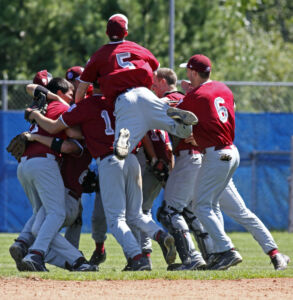
I stood there on the foul line, and I cried.
Not because we’d won a park championship.
But because a kid who had spent a year trapped in his room, haunted by the worst moment of his young life, had just stepped into the center of everything and come through.
He wasn’t the “tall, gawky” kid anymore.
He was the hero.
The Lesson That Built The ARMory
Lance and his mom taught me a lesson I’ve carried into every single interaction since—and it undergirds everything we do at The ARMory.
Every player who walks through our door is the most important person in someone’s life.
That kid who looks lazy? He might be surviving a home you’d never trade places with.
That player whose mom or dad seems “difficult”? They might be fighting battles you’ll never see.
That quiet, awkward 14-year-old on the mound? He might be one honest conversation away from believing in himself for the first time.
If you are called to coaching, your job is not just to build better mechanics or bigger velocity. Your job is to honor the human being in front of you.
You honor them by:
- Giving them everything you have, every time, regardless of talent level or current ability.
- Refusing to judge their story by the tiny slice you see at practice or in a game.
- Committing to make both their game and their life better, even if you’re the only adult who ever sees them that way.
That is the pledge we live by at The ARMory:
We see you.
We know you matter.
We will honor you and your family by always giving you everything we have, all the time.
Lance didn’t just change one season.
He rewired my entire coaching philosophy.
He became the quiet, unseen author of the culture that drives everything we do now.
And that’s exactly why our training doesn’t look like a cookie-cutter “camp.” It’s why our programs are built around the individual, not the average.
Because somewhere in every athlete, there’s a Lance moment waiting to happen.
Where That Culture Lives Now: Our 4 Flagship Programs
If you have a player who needs more than generic drills and empty slogans…
If you want them to be seen, truly seen—body, mind, and story—this is where we start to write their next chapter.
Our Weekend SAVAGE Training Camp is a high-intensity, data-driven, deeply personal reset button on your player’s development.
Across one transformational weekend, your athlete gets:
- A full-body physical screen by a certified physical therapist to uncover hidden movement limitations and injury risks.
- Detailed video analysis of their mechanics so we can build a plan around their actual movement, not a template.
- An individualized throwing program targeting velocity, command, pain reduction, or all three, depending on what they need most.
- SAVAGE power-building and strengthening sessions that pair strength with coordination, in planes of motion that actually match how they throw and hit.
- Customized arm care and world-class recovery protocols so they don’t just throw harder—they throw longer and healthier.
We don’t just send them home with a pat on the back. They leave with a clear map and, often, a whole new belief in what they can be.
SAVAGE Summer is where athletes come to turn potential into performance.
Over 2 to 10 weeks, with rolling starts every Monday, we immerse players in a daily environment built around attention to the individual. Morning and afternoon groups are capped to ensure every player is known, coached, and challenged.
Here’s what a SAVAGE Summer looks like:
- Comprehensive first-day assessment: total body physical, video analysis, and a personalized training binder mapping out their warmup, throwing, arm care, movement enhancers, and strength work.
- Station-based training that blends dynamic warmups, throwing programs, bullpens in our world-class pitching lab, mobility and movement enhancement, and SAVAGE-strengthening and power-building sessions.
- Broga—our blend of SAVAGE movement principles with yoga—to build mobility, coordination, and conditioning in a way most baseball players have never experienced.
- Optional hitting add-on: swing data, video, and individualized drills that teach efficient, powerful, adaptable movement in the box.
Over the past fifteen summers, athletes who trained at least four weeks gained an average of 4.2 mph and improved command by 16 percent—but the bigger win is the confidence and ownership they take home.
Some players don’t need a crowd. They need answers.
Precision Strike is our ultimate one-day, one-athlete experience—a 4-hour, fully personalized diagnostic and training session built around the specific questions your player needs answered.
In a Precision Strike, your athlete gets:
- A complete movement and mechanical evaluation using high-level tech and our attractor-map approach to identify what’s solid and what’s leaking power, command, or health.
- Hands-on, one-on-one corrective skill training with drills tailored to their unique movement profile—no templates, no “this usually works,” no guessing.
- A clear, written plan that tells them exactly what to do next, so they walk away with clarity instead of another pile of random drills.
It’s ideal for:
- Pitchers who need more velocity, better command, or pain-free throwing.
- Position players who need more arm speed, carry, and accuracy.
- Two-way players who want a unified throwing and hitting plan.
This isn’t a lesson. It’s a turning point.
Not everyone can get to Lakeland, Florida—but that doesn’t mean they can’t train like they’re here.
Our SAVAGE Satellite Training brings our entire process to you, online.
Here’s how it works:
- You send us a movement screen and video of your throwing, pitching, and/or hitting.
- We analyze everything and build a customized plan—including movement prep, mobility training, throwing/hitting progressions, SAVAGE strengthening and power work, and skill-specific athleticism development.
- You train from home or your local facility with us guiding you step by step.
It’s the same heart, the same science, the same commitment to honoring the player in front of us—delivered wherever you are.
From Lance to Your Athlete
Every time I stand in our facility and watch a player pick up a ball for the first time with us, I see Lance.
I see the kid everyone underestimated.
The family carrying more than anyone knows.
The quiet athlete who might be one moment—one catch, one conversation, one coach—away from a completely different future.
At The ARMory, we don’t just train arms.
We train people.
We don’t just chase numbers.
We chase stories worth telling.
If you’re ready to give your player the kind of environment where they’ll be seen, challenged, and believed in—where their story matters as much as their stat line—then I’d be honored to walk that journey with you.
You can enroll now in:
Let’s write their “Lance moment” together.
Which of these four experiences feels like the best fit for where your player is right now—an intensive weekend reset, a full summer immersion, a one-day deep dive, or a remote plan they can follow from home?
Click on one of the links above or call us at 866-787-4533
Let's Get SAVAGE https://freedomonlinecoalition.com/
About the Author:

Randy Sullivan, MPT, CSCS
CEO, Florida Baseball ARMory
Our founder and CEO, Randy Sullivan wears a bunch of hats: Physical Therapist, Baseball Instructor, Certified Strength & Conditioning Specialist, Paid Player Development Consultant to MLB teams, Public Speaker and of course an Author.